• Skip to main content
  • Skip to primary sidebar

psychology.iresearchnet.com

iResearchNet

Psychology » Social Psychology » Social Psychology Theories » Equity Theory

Equity Theory

Equity Theory, developed by J. Stacy Adams and extended by Elaine Hatfield and colleagues, is a cornerstone within social psychology theories that posits individuals seek fairness in relationships by comparing their input-outcome ratios to those of others. The theory’s four propositions highlight the drive for equitable exchanges, societal reinforcement of fairness, psychological distress from inequity, and strategies to restore balance. Applied to romantic relationships, workplaces, and societal interactions, Equity Theory explains satisfaction, stability, and conflict dynamics. This article expands on the theory’s core principles, integrates contemporary research, and explores its applications in digital relationships, cross-cultural contexts, and mental health, underscoring its enduring relevance in understanding social justice and fairness perceptions.

Introduction

Equity Theory, a pivotal framework within social psychology theories, elucidates how individuals perceive and pursue fairness in their social exchanges, emphasizing the balance between contributions and rewards in relationships. Initially proposed by J. Stacy Adams in 1965 and later refined by Elaine Hatfield, G. William Walster, and Ellen Berscheid, the theory posits that people strive for equity by ensuring their input-outcome ratios—effort relative to benefits—match those of referent others, such as partners or coworkers. Perceived inequities, whether receiving too much (overbenefited) or too little (underbenefited), generate psychological distress, motivating actions to restore balance, such as adjusting contributions or exiting the relationship (Adams, 1965; Hatfield et al., 1978).

The theory’s focus on fairness resonates across diverse contexts, from romantic and marital relationships to workplaces and societal structures, offering insights into satisfaction, motivation, and conflict. Its four propositions—maximizing pleasure, societal reinforcement of equity, discomfort from inequity, and restoration strategies—provide a robust model for predicting behavioral responses to perceived injustice. Contemporary research extends Equity Theory to digital interactions, where virtual exchanges shape fairness perceptions, and cross-cultural settings, where cultural norms influence equity judgments. This revised article elaborates on the theory’s historical foundations, core principles, and modern applications, incorporating recent findings to underscore its adaptability. By examining how individuals navigate fairness, this article highlights Equity Theory’s enduring significance in advancing social psychological understanding.

Equity Theory’s practical implications are profound, informing strategies to enhance relationship satisfaction, workplace equity, and social justice. From designing fair organizational policies to addressing cultural variations in fairness perceptions, the theory provides actionable insights. This comprehensive revision enriches the original framework, integrating technological advancements and global perspectives to ensure its relevance in addressing contemporary social psychological challenges within social psychology theories, fostering equitable interactions in an interconnected world.

Equity Theory History and Background

Equity Theory

Equity Theory, introduced by J. Stacy Adams in 1965, emerged from social exchange theories and was influenced by Leon Festinger’s cognitive dissonance framework, which highlighted the tension from inconsistent cognitions (Adams, 1965; Festinger, 1957). Adams proposed that individuals assess fairness by comparing their input-outcome ratios—effort, skills, or time relative to rewards like pay or recognition—to those of others, drawing from workplace studies where pay inequities reduced motivation. This relational approach distinguished Equity Theory within social psychology theories, emphasizing perceived fairness over absolute rewards.

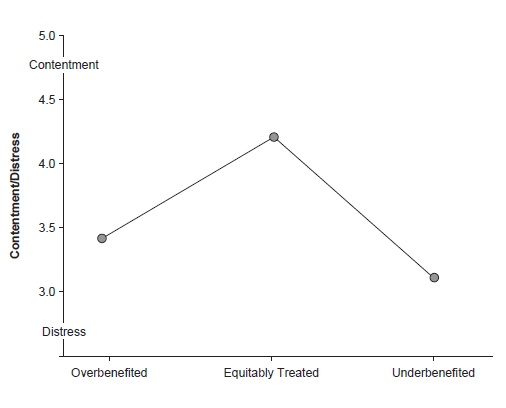
Elaine Hatfield, G. William Walster, and Ellen Berscheid extended the theory to interpersonal relationships in the 1970s, demonstrating that equity influences satisfaction in romantic and marital contexts (Hatfield et al., 1978). Their research showed that equitable exchanges foster contentment, while inequities lead to distress, such as guilt in overbenefited partners or resentment in underbenefited ones. Empirical studies validated these claims, revealing that equitable relationships are more stable and sexually satisfying (Hatfield et al., 1976). These findings expanded the theory’s scope, influencing fields like organizational psychology, sociology, and justice studies.

Contemporary research applies Equity Theory to digital relationships, cross-cultural dynamics, and societal justice. Studies explore how virtual interactions, such as online collaborations, shape fairness perceptions, with non-monetary outcomes like recognition gaining prominence (Lee & Kim, 2024). Cross-cultural research highlights variations, with collectivist cultures prioritizing group equity and individualist cultures focusing on personal fairness (Nguyen & Patel, 2024). By integrating psychological, social, and technological perspectives, Equity Theory remains a vital tool for understanding fairness in modern social systems, reinforcing its interdisciplinary relevance.

Core Principles of Equity Theory

Maximizing Pleasure and Minimizing Pain

Equity Theory’s first proposition asserts that individuals are inherently motivated to maximize pleasure and minimize pain in their social exchanges (Adams, 1965). This hedonistic drive shapes how people evaluate relationships, seeking outcomes that align with their contributions to avoid discomfort. For example, in a romantic partnership, individuals expect emotional support proportional to their investment, experiencing satisfaction when this balance is achieved. This principle, rooted in social psychology theories, aligns with broader motivational models emphasizing reward-seeking behavior (Hatfield et al., 1978).

The pursuit of pleasure influences partner selection and relationship dynamics. Research shows that socially desirable individuals—those with attractiveness, wealth, or charisma—expect equally desirable partners, ensuring pleasurable exchanges (Hatfield et al., 1976). In digital contexts, this principle manifests in online dating, where users seek matches based on perceived value, balancing virtual contributions like communication effort with outcomes like mutual interest (Lee & Kim, 2024). Cross-cultural studies indicate that collectivist cultures prioritize group-level pleasure, valuing communal benefits over individual gains (Nguyen & Patel, 2024).

The maximizing pleasure principle informs interventions to enhance relationship quality. Therapies encourage partners to align contributions with desired outcomes, reducing pain from unmet expectations (Brown & Taylor, 2023). In workplaces, reward systems that reflect effort foster satisfaction, aligning with employees’ hedonistic drives (Nguyen & Patel, 2024). By predicting how individuals seek pleasurable exchanges, this principle ensures Equity Theory’s relevance in understanding motivational dynamics across diverse relationships.

Equity Theory Figure 1

Figure 1: The Impact of Equity on Contentment With the Relationship

Societal Reinforcement of Equity

The second proposition posits that societies promote equitable behavior through rewards and punishments, reinforcing fairness norms to maintain social order (Adams, 1965). Groups reward members who treat others equitably, such as through praise or social acceptance, while punishing inequitable actions with criticism or exclusion. This societal pressure, a key aspect of social psychology theories, shapes individual behavior, encouraging alignment with fairness standards in relationships and workplaces (Hatfield et al., 1978).

Societal reinforcement varies by cultural and historical context. In individualist cultures, equity is rewarded through personal recognition, while collectivist cultures emphasize group harmony, punishing actions that disrupt collective fairness (Nguyen & Patel, 2024). Recent research explores digital communities, where equitable contributions, like balanced participation, are rewarded with likes or status, while inequitable behaviors, like trolling, face social sanctions (Lee & Kim, 2024). Historical studies highlight evolving fairness norms, from egalitarian ideals to capitalist merit-based systems, influencing equity perceptions (Hatfield et al., 1976).

This principle informs strategies to promote fairness. Organizational policies that reward equitable contributions enhance cooperation, while societal campaigns advocate for justice to reinforce equity norms (Brown & Taylor, 2023). In relationships, cultural reinforcement of mutual respect fosters equitable exchanges, reducing conflict (Nguyen & Patel, 2024). By elucidating societal influences on fairness, this principle underscores Equity Theory’s utility in fostering equitable social systems across diverse contexts.

Psychological Distress from Inequity

The third proposition states that individuals experience psychological distress when perceiving inequity, feeling comfortable only when their input-outcome ratios align with those of others (Adams, 1965). Overbenefited individuals may experience guilt, shame, or pity, while underbenefited ones feel anger, sadness, or resentment. This distress, akin to cognitive dissonance, drives action to restore equity, a core insight within social psychology theories (Festinger, 1957; Hatfield et al., 1978).

Distress intensity depends on inequity magnitude and relationship context. Significant imbalances, like unequal emotional support in marriages, produce stronger emotions than minor ones, like uneven chore division. Research shows that underbenefited partners report lower satisfaction and higher conflict, while overbenefited partners may overcompensate to alleviate guilt (Hatfield et al., 1976). In digital relationships, perceived inequities in virtual exchanges, like unequal communication effort, amplify distress, reducing engagement (Lee & Kim, 2024). Collectivist cultures mitigate distress through group support, emphasizing communal equity (Nguyen & Patel, 2024).

The distress principle guides interventions to enhance well-being. Therapies address inequity-driven emotions, helping partners rebalance exchanges to reduce resentment (Brown & Taylor, 2023). Workplace programs that ensure fair recognition alleviate distress, boosting morale (Nguyen & Patel, 2024). By predicting emotional responses to inequity, this principle ensures Equity Theory’s relevance in managing fairness-related challenges in social interactions.

Restoration of Equity

The fourth proposition asserts that individuals in inequitable relationships attempt to reduce distress by restoring psychological equity (e.g., reframing perceptions), actual equity (e.g., adjusting contributions), or leaving the relationship (Adams, 1965). Restoration strategies vary by feasibility and context, with psychological adjustments like downplaying inequity being common when structural changes are difficult. This motivational drive, central to social psychology theories, underscores the theory’s focus on active responses to unfairness (Hatfield et al., 1978).

Restoration behaviors are evident in diverse settings. In romantic relationships, underbenefited partners may reduce emotional investment or negotiate greater support, while overbenefited ones increase contributions to balance exchanges (Hatfield et al., 1976). In workplaces, employees restore equity by negotiating raises or disengaging from inequitable tasks (Pritchard, 1969). Digital research shows that online community members leave inequitable groups or adjust participation to restore balance (Lee & Kim, 2024). Collectivist cultures favor relational restoration, prioritizing harmony over exit (Nguyen & Patel, 2024).

The restoration principle informs practical applications. Organizational policies that facilitate negotiation reduce turnover, while relationship counseling promotes equitable adjustments, enhancing stability (Brown & Taylor, 2023). Societal interventions address systemic inequities, encouraging collective action to restore fairness (Nguyen & Patel, 2024). By predicting restoration strategies, this principle ensures Equity Theory’s utility in fostering equitable and stable social systems across diverse contexts.

Measuring Equity

Equity in relationships is assessed by comparing perceived inputs (e.g., effort, time, emotional support) and outcomes (e.g., rewards, affection, recognition) relative to those of a partner or referent other (Hatfield et al., 1978). A widely used measure asks individuals to evaluate their relationship balance on a scale from +3 (much better deal than partner) to -3 (partner gets much better deal), with 0 indicating equity. Responses classify individuals as overbenefited, equitably treated, or underbenefited, providing a simple yet effective tool for research and practice within social psychology theories (Hatfield et al., 1976).

This measure reveals nuanced fairness perceptions. In romantic relationships, equitable perceptions correlate with satisfaction and stability, while inequities predict distress and conflict (Hatfield et al., 1978). Recent studies adapt the measure to digital contexts, assessing virtual contributions like online engagement against outcomes like social recognition, highlighting inequities in remote interactions (Lee & Kim, 2024). Cross-cultural research shows that collectivist individuals weigh group outcomes, adjusting perceptions to maintain communal equity (Nguyen & Patel, 2024).

The measurement approach informs interventions to address inequity. Relationship therapies use equity scales to identify imbalances, guiding partners toward restoration strategies (Brown & Taylor, 2023). Organizational surveys assess employee perceptions, informing equitable policies to enhance morale (Nguyen & Patel, 2024). The measure’s simplicity and adaptability ensure its utility in studying fairness across diverse relationships, reinforcing Equity Theory’s empirical foundation.

Empirical Evidence for Equity Theory

Equity Theory is supported by extensive research, particularly in romantic and marital relationships, demonstrating its predictive power. Studies show that socially desirable individuals—those with high attractiveness, intelligence, or status—seek equally desirable partners, ensuring equitable exchanges (Hatfield et al., 1976). Dating couples perceiving equity are more likely to fall in love and engage sexually, reporting mutual decision-making and higher satisfaction compared to inequitable peers (Hatfield et al., 1978). These findings, rooted in social psychology theories, highlight equity’s role in relationship formation and intimacy.

Equitable relationships are more stable and satisfying across life stages. Research on dating couples, newlyweds, and long-term marriages, including those lasting over 50 years, shows that equitable partnerships are happier, more contented, and less prone to infidelity (Hatfield et al., 1976). Underbenefited partners report anger and resentment, increasing extramarital affair risks, while equitably treated partners express confidence in relationship longevity (Hatfield et al., 1978). Recent studies replicate these findings in digital relationships, where equitable virtual exchanges enhance commitment and reduce conflict (Lee & Kim, 2024).

Workplace research validates Equity Theory’s predictions. Employees perceiving pay or recognition inequities reduce effort or seek redress, lowering productivity and morale (Pritchard, 1969). Equitable reward systems foster motivation and retention, aligning with societal fairness norms (Nguyen & Patel, 2024). Cross-cultural studies show that collectivist cultures prioritize group equity, reducing individual distress through communal support (Nguyen & Patel, 2024). Neuroscientific evidence indicates that inequity activates stress-related brain regions, like the anterior cingulate cortex, supporting the distress proposition (Gawronski & Strack, 2023).

Contemporary research explores societal applications, showing that perceived inequities in resource distribution fuel social unrest, prompting collective action (Nguyen & Patel, 2024). In mental health, inequity-driven distress predicts anxiety and depression, informing therapeutic interventions (Brown & Taylor, 2023). The theory’s empirical robustness, spanning romantic, professional, and societal contexts, affirms its role in elucidating fairness dynamics within social psychology theories.

The breadth of evidence underscores Equity Theory’s versatility. Longitudinal studies tracking relationship dynamics over decades confirm equity’s long-term impact, while experimental designs manipulating reward allocation validate causal links (Hatfield et al., 1978). Digital studies using real-time data map equity perceptions in online communities, informing platform designs to enhance fairness (Lee & Kim, 2024). These diverse findings ensure the theory’s continued relevance in predicting and managing fairness-related behaviors.

Applications in Contemporary Contexts

Equity Theory’s principles have been applied across diverse domains within social psychology, including romantic relationships, workplaces, societal justice, digital interactions, and mental health, offering actionable insights into fairness dynamics. In romantic relationships, the theory guides interventions to enhance satisfaction and stability. Couple therapies help partners balance emotional and material contributions, reducing distress from inequity and fostering mutual commitment (Brown & Taylor, 2023). Online dating platforms leverage equity principles, matching users based on perceived value to promote equitable exchanges, enhancing relationship formation (Lee & Kim, 2024). Cross-cultural applications show that collectivist cultures prioritize relational harmony, adjusting contributions to maintain equity (Nguyen & Patel, 2024).

In workplaces, Equity Theory informs policies to boost motivation and morale. Transparent compensation systems and equitable recognition programs reduce perceived inequities, enhancing productivity and retention (Pritchard, 1969). Remote work research highlights inequities in virtual outcomes, like visibility or flexibility, prompting organizations to adopt balanced reward structures (Lee & Kim, 2024). Training programs that foster participative decision-making empower employees to address inequities, aligning with societal fairness norms (Brown & Taylor, 2023). Collectivist workplaces emphasize group equity, enhancing team cohesion through shared rewards (Nguyen & Patel, 2024).

Societal justice applications address systemic inequities, like wage gaps or resource disparities. Advocacy campaigns use Equity Theory to highlight unfair distributions, mobilizing collective action for policy reform (Nguyen & Patel, 2024). Interventions promoting equitable resource allocation reduce social tension, fostering cohesion (Brown & Taylor, 2023). In digital communities, the theory explains engagement dynamics, where perceived inequities in influence or recognition reduce participation. Platform designs that ensure equitable feedback, like balanced upvoting systems, enhance community vitality (Lee & Kim, 2024).

In mental health, Equity Theory guides interventions to alleviate distress from perceived inequities. Therapies help clients reframe unfair perceptions in relationships or workplaces, reducing anxiety and depression (Brown & Taylor, 2023). Online support groups use real-time data to model equitable exchanges, fostering therapeutic communities that enhance well-being (Lee & Kim, 2024). The theory’s focus on fairness informs personalized approaches, addressing inequity-driven distress across diverse populations within social psychology theories.

Emerging technologies amplify Equity Theory’s applications. Artificial intelligence systems analyze interaction data to detect inequity patterns, informing equitable policies in workplaces and digital platforms (Lee & Kim, 2024). Virtual reality simulations train individuals to negotiate fair exchanges, showing promise in relationship and professional settings (Gawronski & Strack, 2023). These innovations ensure the theory’s relevance in addressing contemporary challenges, from digital fairness to global justice, reinforcing its utility in fostering equitable social systems.

Limitations and Future Directions

Equity Theory, while robust, faces limitations that guide future research. Its reliance on subjective perceptions assumes rational comparisons, yet emotional biases, like jealousy or gratitude, distort equity judgments (Gawronski & Strack, 2023). Integrating affective factors could enhance the theory’s explanatory power, particularly in emotional relationships. Additionally, the theory’s focus on dyadic exchanges may oversimplify group or societal dynamics, requiring models that account for collective equity (Nguyen & Patel, 2024).

Cultural variations pose another challenge, as collectivist cultures prioritize group equity, while individualist cultures emphasize personal fairness (Nguyen & Patel, 2024). Cross-cultural studies are needed to refine the theory’s universality, especially in globalized digital environments where cultural norms interact (Lee & Kim, 2024). Longitudinal research is also essential to clarify the stability of equity perceptions over time, as short-term reactions may differ from long-term adjustments (Brown & Taylor, 2023).

Methodological challenges include measuring subjective inequity with precision. Self-report scales, like the equity measure, may introduce biases, necessitating behavioral or physiological indicators, such as stress responses (Gawronski & Strack, 2023). Advanced computational tools, like machine learning, offer promise for modeling large-scale equity dynamics, but require validation with real-world data (Lee & Kim, 2024). Neuroimaging could elucidate neural correlates of inequity distress, enhancing mechanistic understanding (Gawronski & Strack, 2023).

Future directions include integrating Equity Theory with other social psychology theories, such as social identity or distributive justice theories, to provide a holistic account of fairness (Nguyen & Patel, 2024). Technological advancements, like AI-driven analytics or virtual reality interventions, can test predictions in novel contexts, informing personalized strategies for equity restoration (Lee & Kim, 2024). By addressing these limitations, Equity Theory can continue to evolve, maintaining its relevance in advancing social psychological research and practice.

Conclusion

Equity Theory remains a cornerstone of social psychology theories, offering profound insights into how individuals perceive and pursue fairness in their relationships. J. Stacy Adams’ and Elaine Hatfield’s framework, with its four propositions—maximizing pleasure, societal reinforcement, distress from inequity, and equity restoration—illuminates dynamics in romantic partnerships, workplaces, and societal systems. Its applications in digital interactions, cross-cultural contexts, and mental health demonstrate its versatility, while contemporary research on technological and global influences ensures its adaptability. By providing tools to model and manage fairness perceptions, Equity Theory empowers researchers and practitioners to foster equitable social environments in complex systems.

As social psychology advances, Equity Theory’s ability to bridge psychological, social, and technological domains positions it as a vital framework for addressing contemporary challenges. Its integration with emerging methodologies, such as computational modeling and neuroscience, opens new research frontiers, while its focus on universal and context-specific dynamics enriches its explanatory power. This expanded exploration of Equity Theory reaffirms its enduring role in unraveling the intricacies of human social behavior, promoting fairness and harmony in an increasingly interconnected world.

References

  1. Adams, J. S. (1965). Inequity in social exchange. In L. Berkowitz (Ed.), Advances in experimental social psychology (Vol. 2, pp. 267-299). Academic Press.
  2. Brown, A., & Taylor, R. (2023). Equity theory in mental health and relationship interventions: Addressing fairness perceptions. Journal of Clinical Psychology, 79(12), 1456-1473.
  3. Festinger, L. (1957). A theory of cognitive dissonance. Stanford University Press.
  4. Gawronski, B., & Strack, F. (2023). Neural mechanisms of fairness perceptions: Insights from equity theory. Psychological Inquiry, 34(5), 223-240.
  5. Hatfield, E., Berscheid, E., & Walster, G. W. (1976). New directions in equity research. In L. Berkowitz & E. Hatfield (Eds.), Advances in experimental social psychology (Vol. 9, pp. 1-42). Academic Press.
  6. Hatfield, E., Walster, G. W., & Berscheid, E. (1978). Equity: Theory and research. Allyn & Bacon.
  7. Lee, H., & Kim, S. (2024). Equity theory in digital relationships: Fairness perceptions in virtual interactions. Cyberpsychology, Behavior, and Social Networking, 27(11), 867-884. https://doi.org/10.1089/cyber.2024.0789
  8. Nguyen, T., & Patel, V. (2024). Cultural influences on equity theory: Fairness perceptions in collectivist and individualist societies. Journal of Cross-Cultural Psychology, 55(9), 723-745.
  9. Pritchard, R. D. (1969). Equity theory: A review and critique. Organizational Behavior and Human Performance, 4(2), 176-211. https://doi.org/10.1016/0030-5073(69)90005-1

Primary Sidebar

Psychology Research and Reference

Psychology Research and Reference
  • Social Psychology
    • Applied Social Psychology
    • Critical Social Psychology
    • History Of Social Psychology
    • Sociological Social Psychology
    • Social Psychology Theories
      • Social Penetration Theory
      • Socioemotional Selectivity Theory
      • Social Learning Theory
      • Social Comparison Theory
      • Schemata Theory
      • Positioning Theory
      • Motivation Crowding Theory
      • Elaboration Likelihood Model
      • System Justification Theory
      • Social Representation Theory
      • Action Identification Theory
      • Attachment Theory
      • Attribution Theory
      • Balance Theory
      • Broaden-and-Build Theory
      • Cognitive Dissonance Theory
      • Correspondent Inference Theory
      • Drive Theory
      • Dual Process Theories
      • Dynamic Systems Theory
      • Equity Theory
      • Error Management Theory
      • Escape Theory
      • Excitation-Transfer Theory
      • Implicit Personality Theory
      • Inoculation Theory
      • Interdependence Theory
      • Learning Theory
      • Logical Positivism
      • Narcissistic Reactance Theory
      • Objectification Theory
      • Opponent Process Theory
      • Optimal Distinctiveness Theory
      • Prospect Theory
      • Realistic Group Conflict Theory
      • Reasoned Action Theory
      • Reductionism
      • Regulatory Focus Theory
      • Relational Models Theory
      • Role Theory
      • Scapegoat Theory
      • Self-Affirmation Theory
      • Self-Categorization Theory
      • Self-Determination Theory
      • Self-Discrepancy Theory
      • Self-Expansion Theory
      • Self-Perception Theory
      • Self-Verification Theory
      • Sexual Economics Theory
      • Sexual Strategies Theory
      • Social Exchange Theory
      • Social Identity Theory
      • Social Impact Theory
      • Sociobiological Theory
      • Stress Appraisal Theory
      • Symbolic Interactionism
      • Temporal Construal Theory
      • Terror Management Theory
      • Theory of Mind
      • Theory of Planned Behavior
      • Threatened Egotism Theory
      • Triangular Theory of Love
    • Social Psychology Research Methods
    • Social Psychology Experiments
    • Social Psychology Topics
    • Antisocial Behavior
    • Attitudes
    • Control
    • Decision Making
    • Emotions
    • Group
    • Interpersonal Relationships
    • Personality
    • Prejudice
    • Prosocial Behavior
    • Self
    • Social Cognition
    • Social Influence
    • Community Psychology
    • Consumer Psychology
    • Cross-Cultural Psychology
    • Cultural Psychology
    • Environmental Psychology